Chimney Flashing Repair in Surrey: Why It Fails First
Chimneys are one of the most common leak points on a roof because they interrupt the roofline entirely. Here's how flashing failure happens and gets fixed.
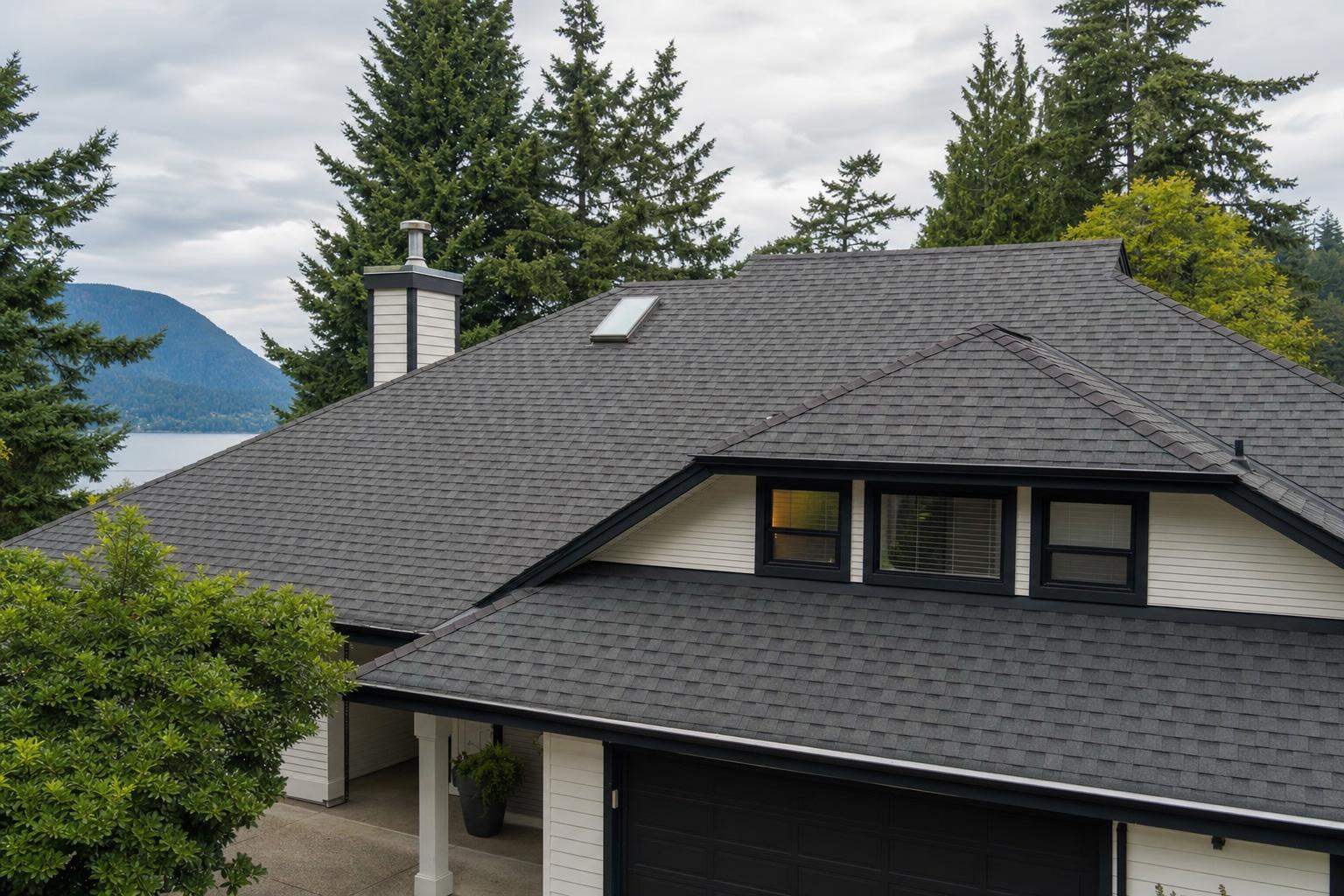
You've got a stain on the ceiling or wall near your chimney, and the cause is very often not the chimney itself but the flashing where it meets the roof.
Why chimneys are a weak point
A chimney is a rigid structure poking through a roof plane that otherwise needs to flex slightly with temperature changes. The flashing system — step flashing along the sides, a saddle or cricket at the back, and counter-flashing set into the masonry — is what bridges that gap and needs to be installed and maintained correctly to stay watertight.
Common failure points
Step flashing can work loose or corrode over time. Counter-flashing sealant (where flashing meets brick or stucco) dries out and cracks. On wider chimneys, a missing or undersized cricket (the small peaked structure that diverts water around the uphill side) is a frequent, hidden cause of chronic leaks.
How it's diagnosed
Diagnosis involves checking each flashing component individually rather than assuming the whole system needs replacement — often only the counter-flashing seal or a section of step flashing has actually failed.
Why this matters in Surrey specifically
Surrey's freeze-thaw swings and near-constant winter moisture accelerate sealant breakdown around masonry chimneys, and homes with larger or wider chimneys are more likely to need a cricket if one wasn't installed originally. Chimney flashing repairs are one of the most frequently requested flashing repairs in the Surrey guide set for this reason.
For guidance on moisture management and roofing maintenance in British Columbia, homeowners can consult Canada Mortgage and Housing Corporation (CMHC) homeowner resources and the City of Surrey building permit information.
Typical Chimney Flashing Repair Cost Ranges
| Item | Typical Range | What affects the price |
|---|---|---|
| Re-seal counter-flashing | Contact for assessment | Chimney size, masonry condition |
| Step flashing repair/replacement | Contact for assessment | Number of flashing pieces affected |
| Add or rebuild cricket | Contact for assessment | Chimney width, roof pitch |
How it works, step by step
Diagnose the leak path
We trace the leak from the interior stain back to the specific flashing component involved.
Assess masonry condition
Cracked or spalling masonry near the flashing line is noted, since it affects the repair approach.
Repair or replace flashing
Step flashing, counter-flashing, or a cricket is repaired or rebuilt as needed.
Re-seal & test
New sealant is applied at masonry joints and the repair is visually checked for proper water shedding.
Chimney Flashing Repair Surrey — FAQ
Is it the chimney or the flashing that's leaking?
Almost always the flashing, not the chimney structure itself — masonry chimneys are rarely the direct source of a leak.
Do I need a cricket on my chimney?
Generally recommended for chimneys wider than about 24-30 inches on the uphill side, though it depends on roof pitch and water volume — this is confirmed on-site.
Can this be fixed without removing bricks?
Most flashing repairs don't require removing masonry, though counter-flashing reveals may need minor repointing.
How long does a flashing repair take?
Most chimney flashing repairs are completed in a single day, weather permitting.
Ready to fix it properly?
Get a free, no-obligation quote from Surrey Roofing Authority.
Request a Free Quote