Roof Ventilation in Surrey: Balancing Intake and Exhaust
Ventilation is one of the least visible parts of a roofing system, and one of the most consequential for how long the rest of it lasts.
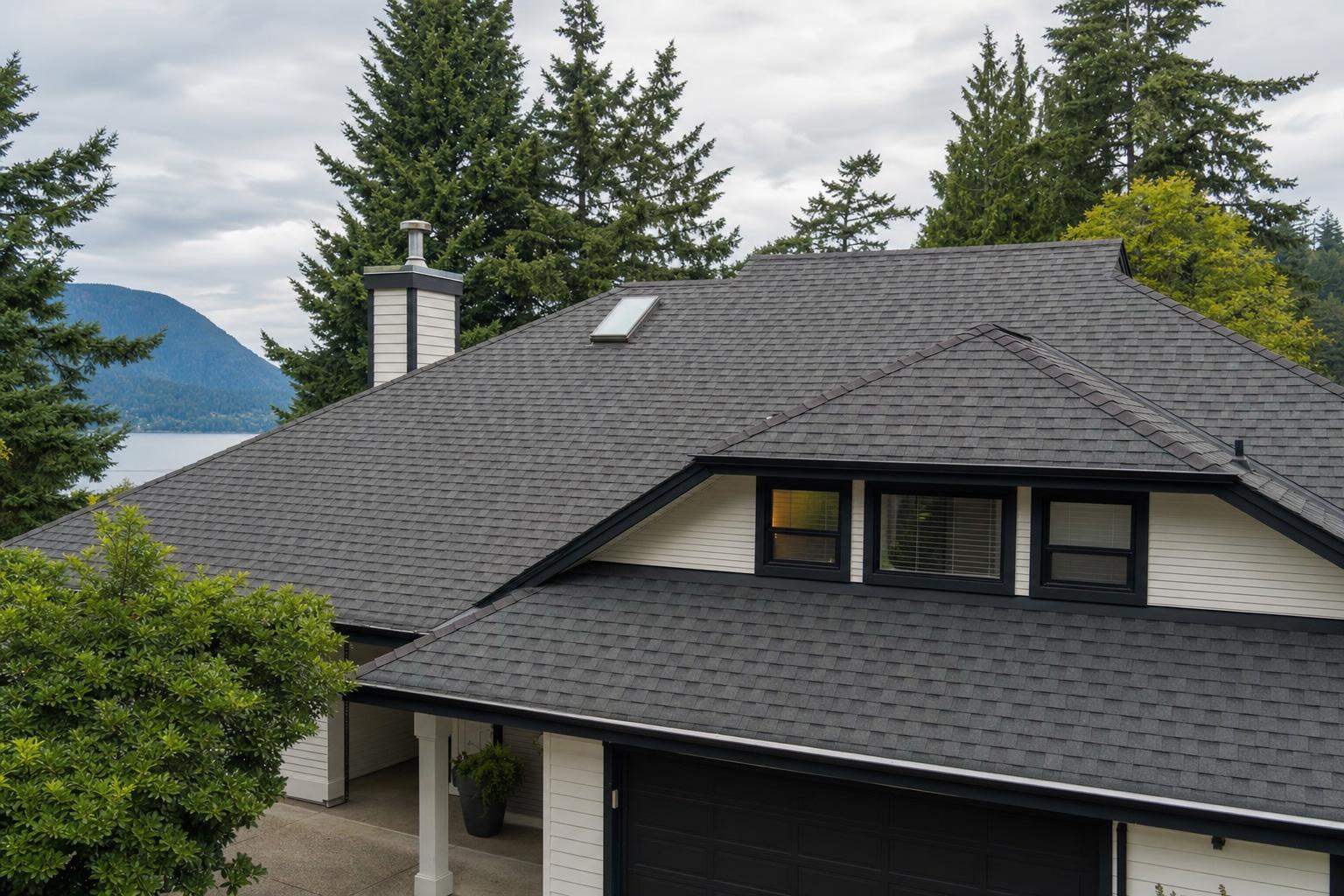
You may be dealing with condensation in the attic, ice damming, premature shingle aging, or a musty smell — all of which can trace back to a ventilation system that isn't balanced correctly, even if the roofing material itself is fine.
Why ventilation exists at all
A roof and attic system needs a continuous flow of air: intake vents (typically at the soffit) draw in outside air, and exhaust vents (ridge, roof, or gable vents) let warm, moist air out. This flow controls temperature and moisture in the attic year-round, which protects both the roofing material from below and the living space below the attic.
What happens when it's unbalanced
Too little exhaust relative to intake, or vice versa, traps moist air in the attic. In winter this shows up as condensation on the underside of the roof deck, which can lead to mould and wood rot over time. It also reduces insulation effectiveness and, in some cases, contributes to ice damming at the eaves.
Signs of a ventilation problem
Visible frost or condensation on the underside of the roof deck in cold weather, a musty attic smell, unusually hot upstairs rooms in summer, or premature curling of shingles from below (heat and moisture aging the material from the underside) are all indicators worth investigating.
Why this matters in Surrey specifically
Surrey's high ambient humidity for much of the year makes moisture-driven ventilation problems more common and more damaging than in drier climates — trapped moisture has more opportunity to condense given the outdoor-to-indoor temperature and humidity differential typical of Pacific Northwest winters.
For guidance on moisture management and roofing maintenance in British Columbia, homeowners can consult Canada Mortgage and Housing Corporation (CMHC) homeowner resources and the City of Surrey building permit information.
Typical Ventilation Improvement Cost Ranges
| Item | Typical Range | What affects the price |
|---|---|---|
| Ventilation assessment | Contact for assessment | Attic access, roof complexity |
| Add/upgrade soffit intake vents | Contact for assessment | Number of vents, soffit condition |
| Add ridge or roof exhaust vents | Contact for assessment | Vent type, roof length |
| Full ventilation system rebalance | Contact for assessment | Scope of intake/exhaust changes needed |
How it works, step by step
Attic assessment
We check current intake and exhaust vent locations, insulation, and any signs of moisture damage.
Calculate required airflow
Ventilation needs are calculated based on attic square footage per standard ratios.
Address gaps
Blocked soffit vents are cleared, and additional intake or exhaust is added where needed.
Recheck balance
The system is reviewed to confirm intake and exhaust are proportioned correctly, not just present.
Roof Ventilation Surrey — FAQ
Can too much ventilation be a problem?
Yes — an imbalance in either direction (too much exhaust relative to intake, or vice versa) reduces effectiveness; the goal is balance, not maximum vents.
Does insulation affect ventilation needs?
Yes, insulation and ventilation work together — blocking soffit intake vents with insulation is a common, fixable mistake that undermines an otherwise adequate system.
Will better ventilation lower my energy bills?
It can help regulate attic temperature, which affects heating/cooling load, though the effect size depends on your specific home.
Is poor ventilation covered under a roofing warranty?
5-year workmanship warranty
Ready to fix it properly?
Get a free, no-obligation quote from Surrey Roofing Authority.
Request a Free Quote