Valley Flashing Repair in Surrey: Handling the Heaviest Water Flow
Roof valleys carry more water than any other part of the roof. Here's how the flashing there is built to handle it, and what happens when it doesn't.
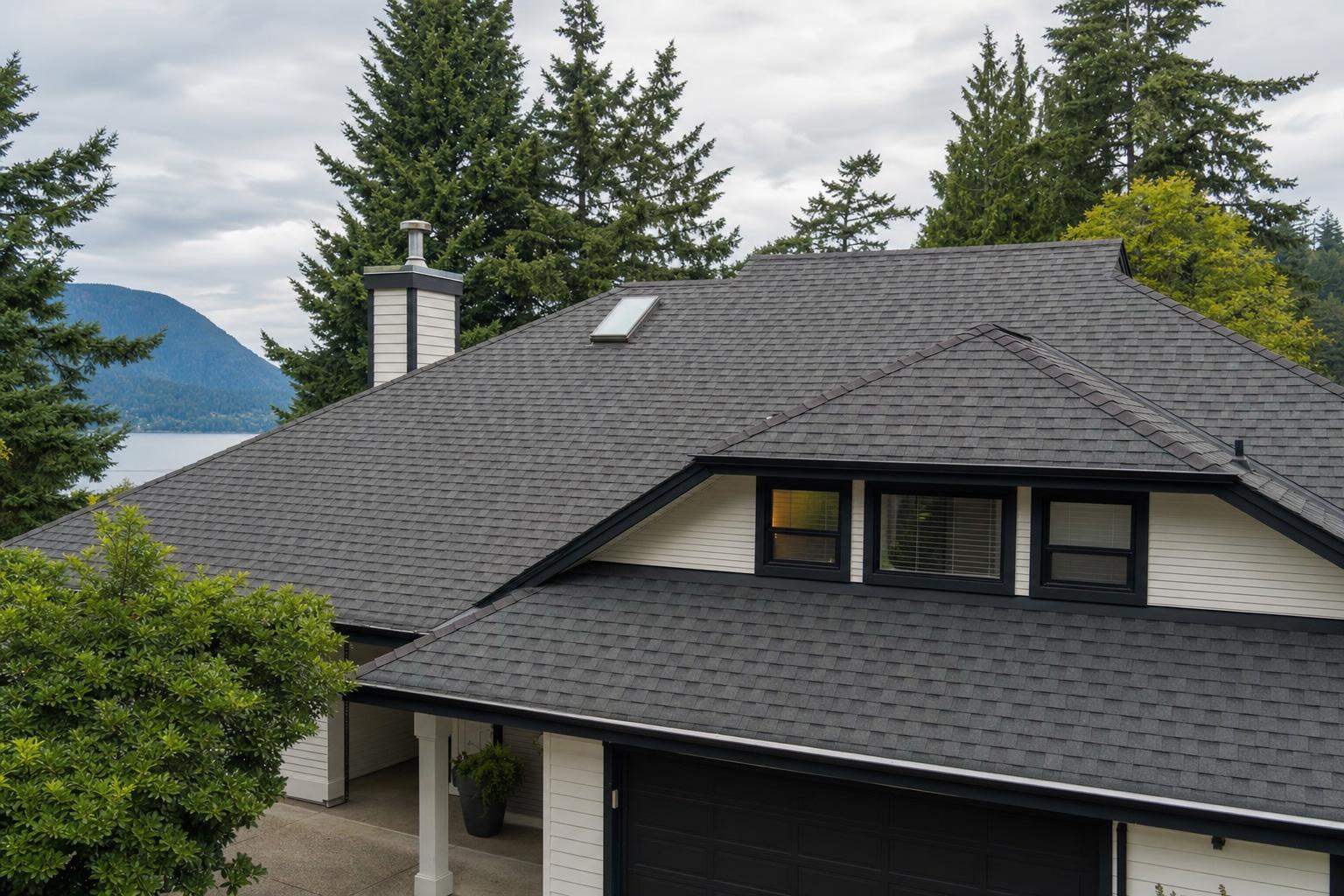
A leak is showing up somewhere along the seam where two roof slopes meet — the valley — which is the highest-water-volume area on almost any roof.
Why valleys take the most abuse
A valley is where two roof planes meet and funnel water from both sides into a single channel. During heavy rain, this concentrates far more water volume, and debris, than any flat section of roof, which is why valley flashing is built to a higher standard than field flashing.
Open vs. closed valleys
Open valleys expose a metal channel down the middle, which sheds water and debris efficiently but requires precise metal work. Closed (woven or cut) valleys use shingles overlapping across the valley line, which look more uniform but can be more prone to granule wear at the highest-flow point over time.
Common failure signs
Granule loss concentrated along the valley line, metal flashing that's visibly corroded or has pulled away from the edge, and debris buildup that channels water sideways under shingle edges are the most common precursors to a valley leak.
Why this matters in Surrey specifically
Given Surrey's rainfall volumes, valley flashing does proportionally more work here than in drier regions, and debris from surrounding trees (common in many Surrey neighbourhoods) tends to collect in valleys and accelerate wear if gutters and valleys aren't cleared regularly.
For guidance on moisture management and roofing maintenance in British Columbia, homeowners can consult Canada Mortgage and Housing Corporation (CMHC) homeowner resources and the City of Surrey building permit information.
Typical Valley Flashing Repair Cost Ranges
| Item | Typical Range | What affects the price |
|---|---|---|
| Debris clearing & inspection | Contact for assessment | Valley length, accumulation level |
| Section repair (open valley metal) | Contact for assessment | Length of metal replaced |
| Full valley re-flash | Contact for assessment | Valley length, shingle tie-in work |
How it works, step by step
Clear & inspect
Debris is cleared from the valley so the flashing and surrounding shingles can be properly assessed.
Identify failure point
Corrosion, granule loss, or shingle lift along the valley line is pinpointed.
Repair or replace flashing
Damaged metal or shingle sections are replaced and properly tied into the surrounding roof.
Test water flow
The repaired valley is checked to confirm water sheds cleanly without pooling or backflow.
Valley Flashing Repair Surrey — FAQ
Which valley type is better, open or closed?
Both are legitimate, code-accepted approaches; the right choice depends on roof design, material, and maintenance preference — we can walk through trade-offs on-site.
Why does my valley keep collecting debris?
Tree cover and roof pitch both affect this — regular gutter and valley clearing, especially in fall, reduces the chance of a debris-caused leak.
Can a valley be repaired without redoing the whole roof?
In most cases yes, if the surrounding shingle field is still in good condition.
How urgent is a valley leak?
Valley leaks can move water quickly given the volume involved — treat it with similar urgency to our emergency leak guide.
Ready to fix it properly?
Get a free, no-obligation quote from Surrey Roofing Authority.
Request a Free Quote